
Running shoes can be a brilliant present, but guessing the fit should not be the gift.
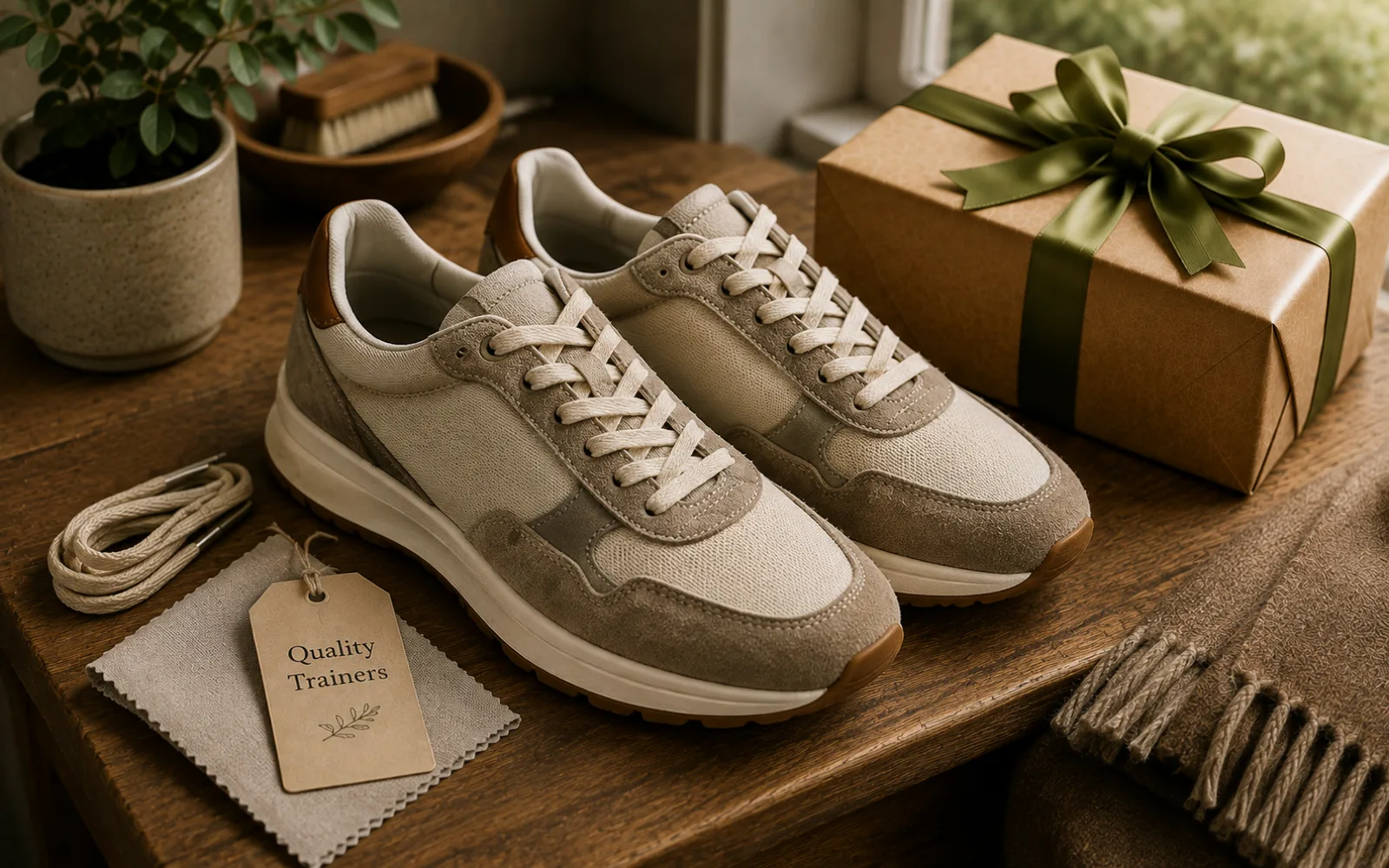
Running shoes are a useful, encouraging gift for someone who already runs, wants to start, or is quietly trying to make the habit stick. They are also one of the easiest presents to get slightly wrong.
A running shoe is not just a colour, brand or price point. Fit, width, cushioning, running surface and personal preference all matter. The best gift is often not "I guessed the perfect pair", but "I helped you get the right pair without making it feel like admin".
Running shoes are a good gift when they support a habit the recipient already wants. They are a bad gift when they quietly say: "You should become a runner now."
Before buying, ask one question: Can I choose these without guessing the fit?
If the answer is yes, a pair of shoes can work. If the answer is no, make the fitting, contribution or choice part of the gift instead.
5 yeses: buying the shoes can work.
3-4 yeses: only buy if you can closely match a pair they already love.
0-2 yeses: make the fitting, contribution or gift card the gift instead.
| What you know | Risk | Best gift route |
|---|---|---|
| Exact model, size and width | Low | Buy the same pair, or check the updated version carefully |
| Size and running type, but no model | Medium | Choose together |
| Only their casual shoe size | High | Gift card or specialist fitting |
| They mention pain or injuries | High | Do not diagnose through footwear; let them choose |
| They have never said they want to run | Very high | Choose another gift |
The strongest version is usually: "I'd like to get you a proper pair. Let's choose them together."
That might mean a planned visit to a specialist running shop where they can try several pairs and get fitting advice. It might mean a gift card with a clear purpose. It might mean a card saying you will cover the cost up to a set amount.
This still feels like a gift because the thought is specific. You are not outsourcing the effort. You are removing the bad guess.
A good card message could be: "For a proper pair of running shoes, chosen with no guessing."
Running shoes often fit differently from casual trainers. Some runners go up half a size because feet can swell during longer runs, but do not automatically size up on their behalf. Brand sizing, foot width and toe-box shape vary too much.
The number on the box matters less than knowing what size they already run comfortably in.
A shoe for short treadmill runs is not the same as a shoe for wet park paths, trail routes or long road runs. If you do not know the surface and distance, avoid very specialised shoes.
Neutral, stability, cushioned and performance shoes can feel very different. Unless the runner already knows what works for them, do not try to diagnose their needs from flat feet, pronation or an old injury.
If they already wear and like a particular type of shoe, that is useful information. If they have recurring pain or a complicated injury history, choosing together, or getting professional advice where appropriate, is safer than guessing.
The best clue is often the pair they already use. Replacing the exact same model, size and width is one of the safest surprise routes. An updated version is less certain: familiar branding does not guarantee familiar fit.
Do not assume "the new version" fits exactly like the old one.
Running shoes are fit-sensitive, so returns matter. Before paying, check how many days they have, whether exchanges are allowed, whether indoor try-on keeps them returnable, and whether the original box, tags and receipt are required.
Keep everything until the recipient has tried them indoors.
These are checks for the recipient to make, not things you can reliably judge for them.
If they are unsure after trying them on, that is a sign to exchange rather than hope the shoe improves.
For running shoes, a gift card can be more thoughtful than a surprise pair. A vague gift card says: "You decide." A good running-shoe gift card says: "I know you want better running shoes, and I want you to get the pair that actually fits."
The difference is framing. Put the reason in the card. Suggest a shop. Offer to go with them. Make the choice feel like part of the gift, not unfinished work.
If you like the running theme but do not know enough about their shoes, choose something with lower fit risk: technical running socks, a running cap, lightweight gloves, a running belt, a soft flask, recovery support or a contribution toward trainers chosen together.
Avoid buying based only on colour. Avoid carbon-plated race shoes unless they specifically asked for them. Avoid trail shoes for someone who mostly runs on roads. Avoid assuming expensive means better. And avoid surprise "motivational" gifts for someone who has not expressed interest in running.
A running gift should feel like support, not a hint.
The best running-shoe gift is not the most impressive box to unwrap. It is the pair they actually reach for, run in, and keep using.
If you know their exact preferences, buying the shoes can be a lovely surprise. If you do not, give the choice beautifully. That is not less thoughtful. For running shoes, it may be the whole point.
It can be a good idea if you know the recipient already wants running shoes and you can avoid guessing the fit. If you only know their normal shoe size, choose a fitting appointment, contribution or gift card instead.
Replacing the exact same model, size and width is one of the safest surprise routes. A newer version of the same model is less certain because brands can change the fit between versions.
Not if it is framed clearly. A gift card for a proper pair of running shoes, chosen with fitting advice, can be more thoughtful than a surprise pair that does not fit.
Lower-risk running gifts include technical running socks, a cap or gloves, a running belt, a soft flask, recovery support or a contribution toward trainers chosen together.
First published 3 September 2026. Last reviewed 3 September 2026.