When it works — and when to choose something else
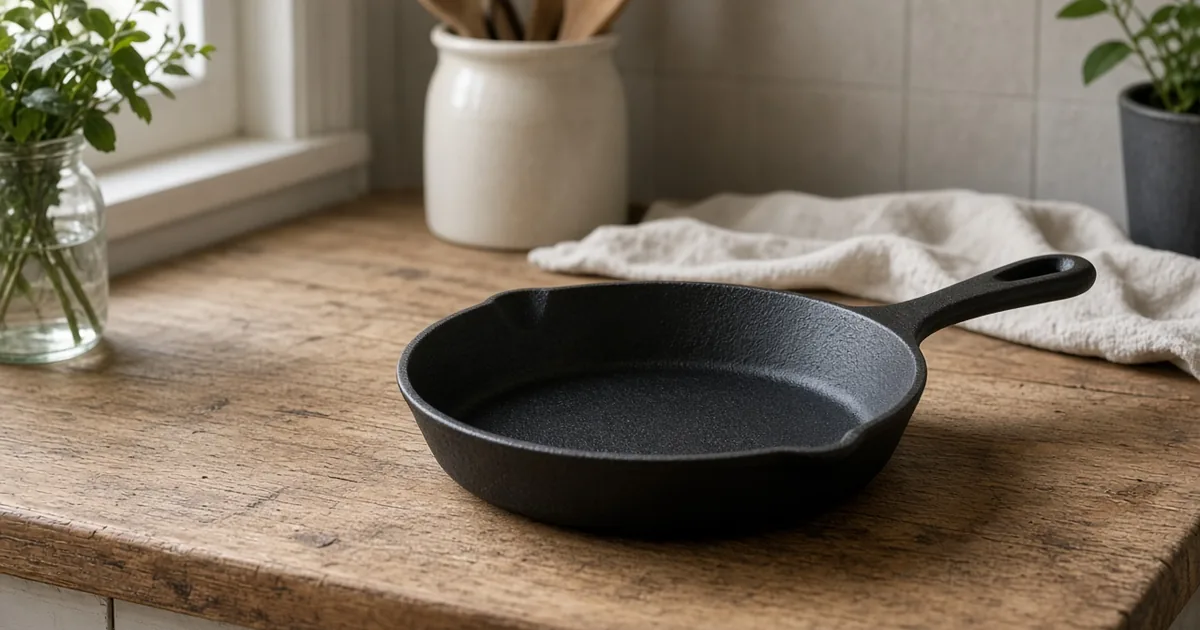
Cast iron is the upgrade people put off for years — the pan that outlives several kettles. It only works as a gift if it fills a gap. A second 10″ skillet they already own is clutter with a bow on it. Ask first; then choose.
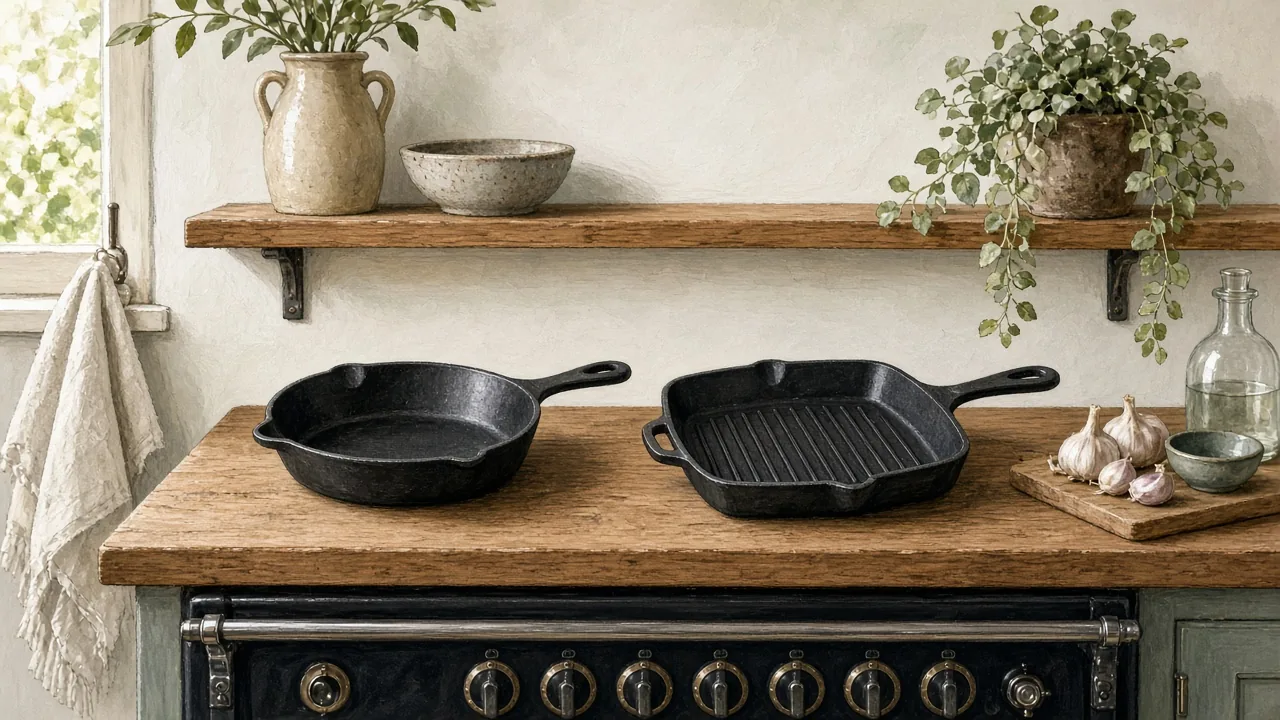
If yes: don’t buy the same size and shape again. If no: around 25–26cm (about 10″) is the useful starting point for most kitchens.
Around 25–26cm earns its keep for most home cooks. Go larger only if you know they have the hob space, storage and are happy lifting a heavier pan. Tiny “gift set” pans look generous and get used twice.
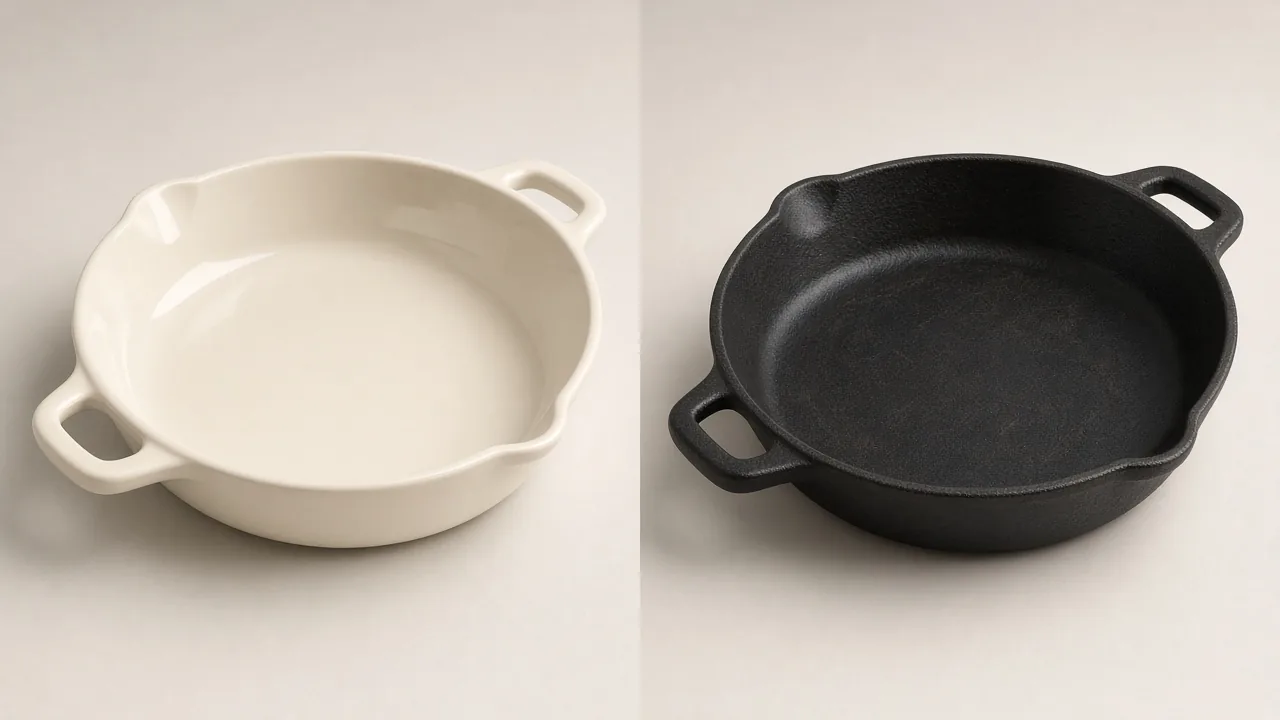
Enamel: lower maintenance, fine with acidic sauces, no seasoning required, but the coating can chip if badly knocked. Bare iron: needs seasoning and drying properly, develops a naturally slicker cooking surface over time, but needs more care and should stay out of the dishwasher. Match how they cook — not which one photographs better.
Cast iron is heavy before dinner goes in it. If they struggle lifting a full pan, regularly cook one-handed, or prefer lightweight cookware, skip it. Bigger is not an upgrade if it makes the pan annoying to use.
If they already own a skillet, change the job, not just the diameter: ridged grill pan, shallow casserole, Dutch oven, griddle or crêpe pan. The point is filling a gap, not doubling the shelf.
| Budget | What you usually get |
|---|---|
| Under £40 | Usually entry bare-iron skillet territory — fine if they’ll look after it. |
| Around £40–80 | More choice in finish, size and shape, including some enamelled options. |
| £80+ | Larger enamel or specialist shapes — worth it only when the gap is real. |
Buying for a parent who cooks every night? Cast iron is one of our Christmas gifts for mum or dad.
If this sounds like them — practical upgrades that earn their space — start with the Virgo guide, the Taurus guide or the Capricorn guide.
First published 17 September 2026. Last reviewed 17 September 2026.